Two visits, not one
The technician arrives without the right part and has to come back.
Maintain assets
Knowing a charger has failed is half the job. Iris R-One turns faults, schedules and predictions into controlled work, with the right part reserved and the result written back to the asset record.
Slow, unplanned repairs keep chargers down longer than the fault itself.
The technician arrives without the right part and has to come back.
Every job looks urgent, so the chargers that matter most wait.
Planned inspections go overdue, and wear turns into failure.
The same console, mobile app and evidence model run both.
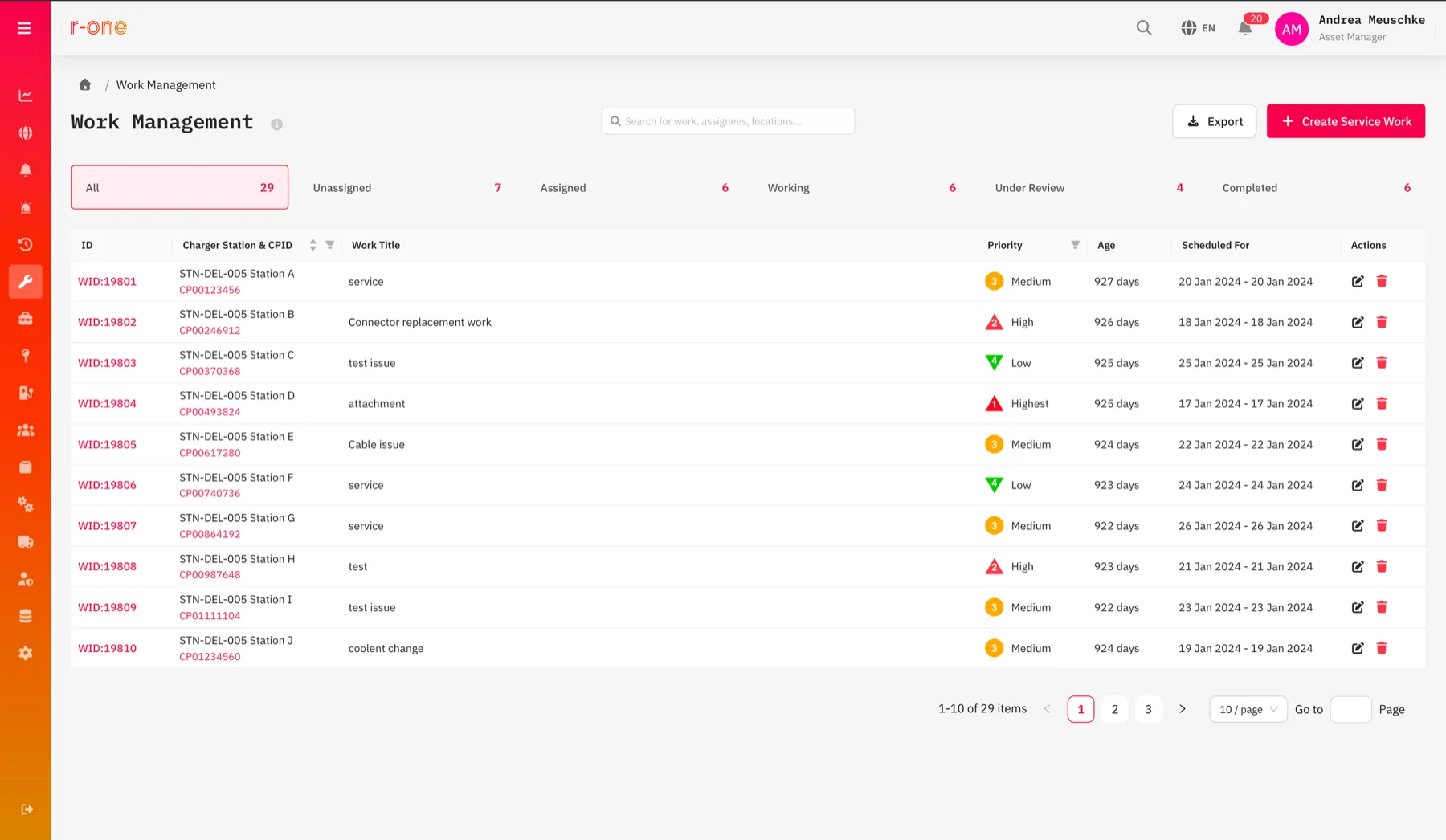
Jobs raised manually, from a Logged or Derived fault, or from a prescribed action.
Severity, SLA timer and age on every open job.
Unassigned, assigned, en route, work in progress, completed under review, completed, and forwarded.
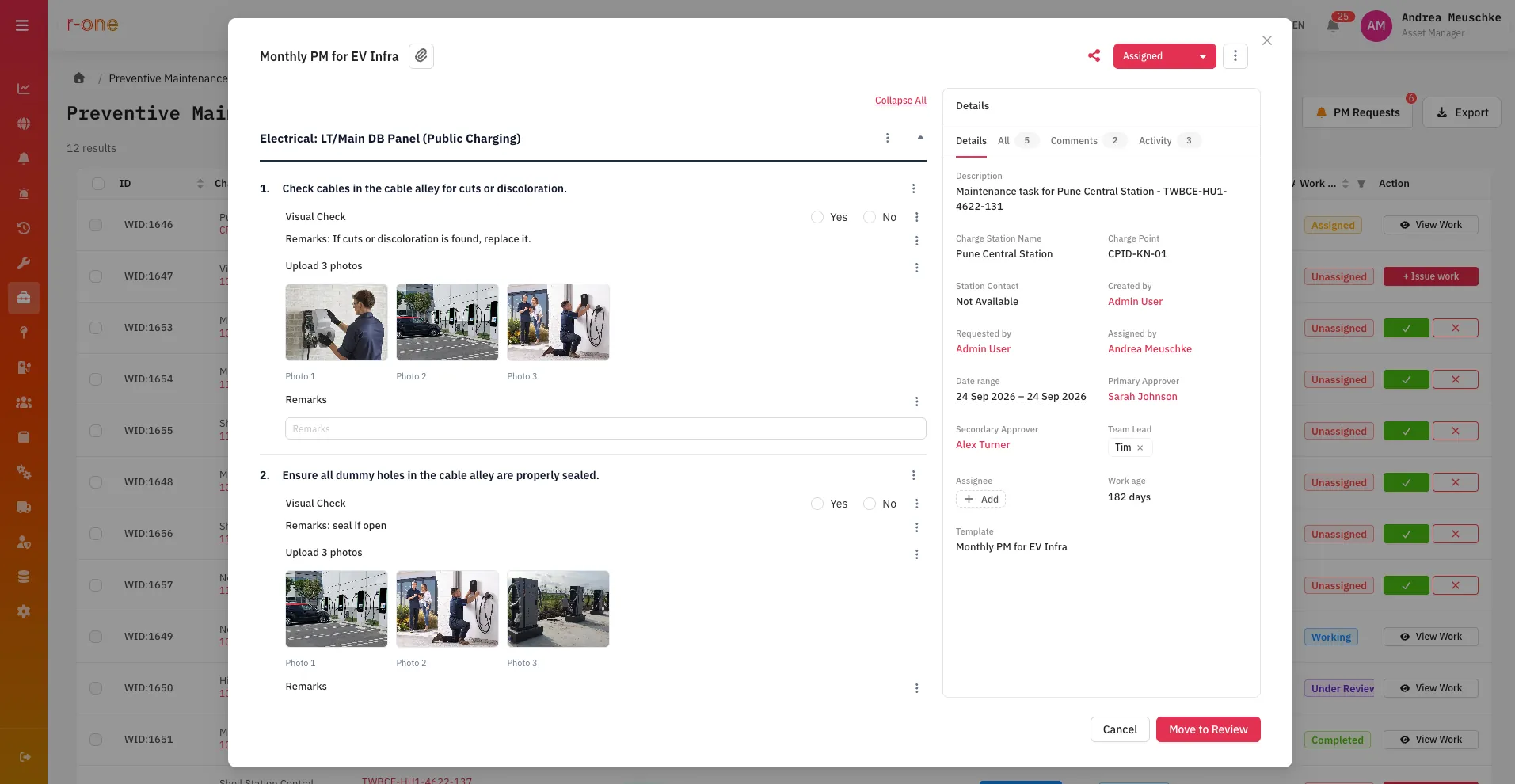
Checklist and evidence are required before closure, and central teams approve or reject.
By time, usage, OEM guidance or condition.
OEM and operator checklists applied the same way on every visit.
Missed services flagged before they become failures.
Every completed visit recorded against the asset with its evidence.
A fault, schedule or prescribed action creates the job.
Severity, SLA and impact set the order.
A technician is matched by region, skill and availability.
Parts, tools and access are reserved before dispatch.
Work is completed in the mobile app, online or offline.
Evidence is reviewed, and the asset record is updated.
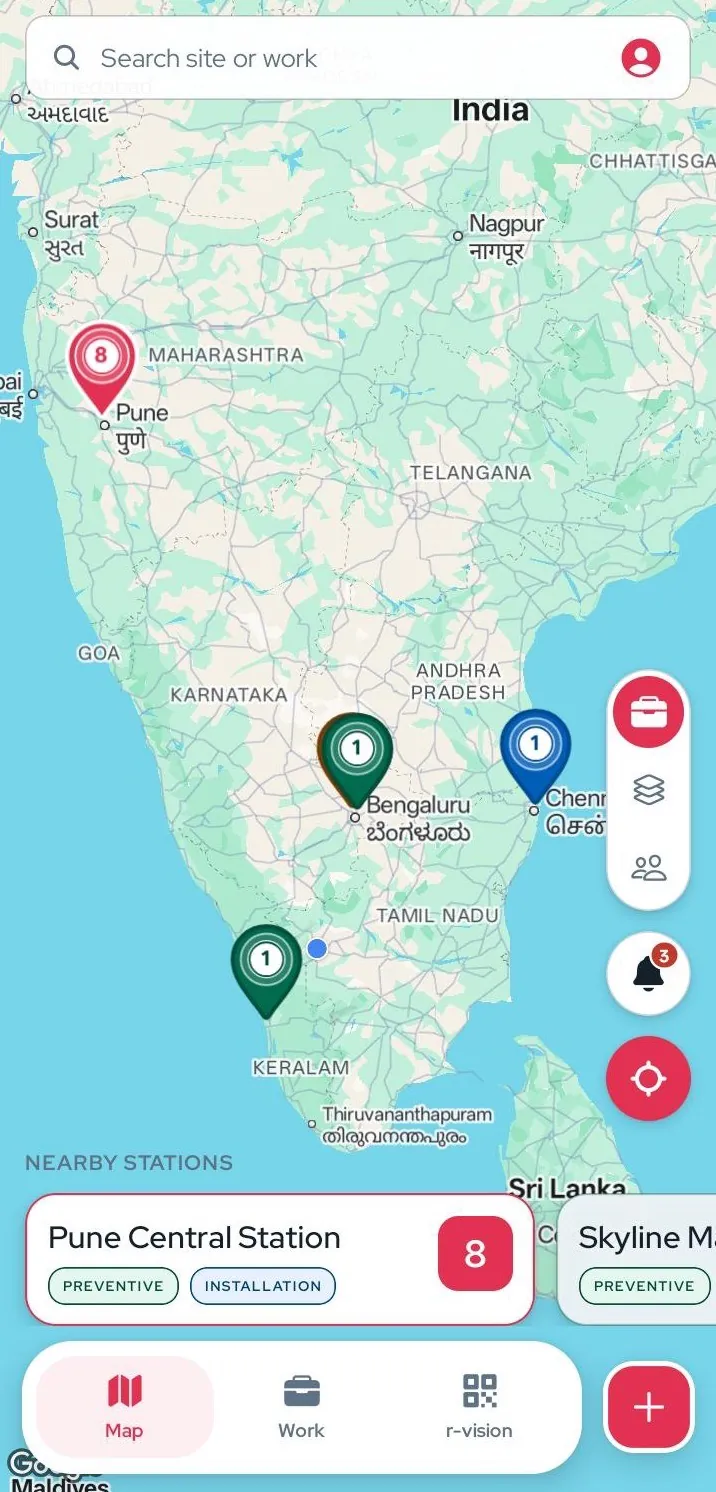
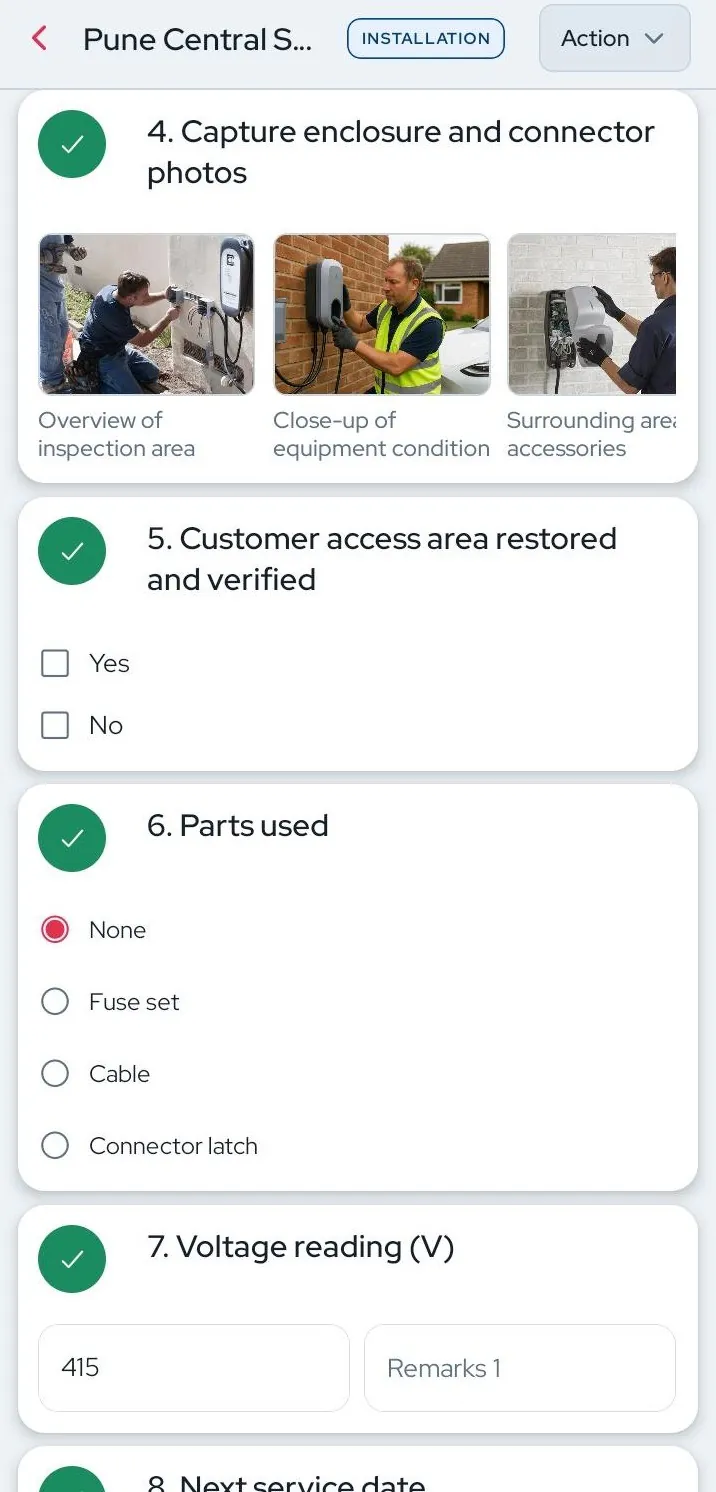
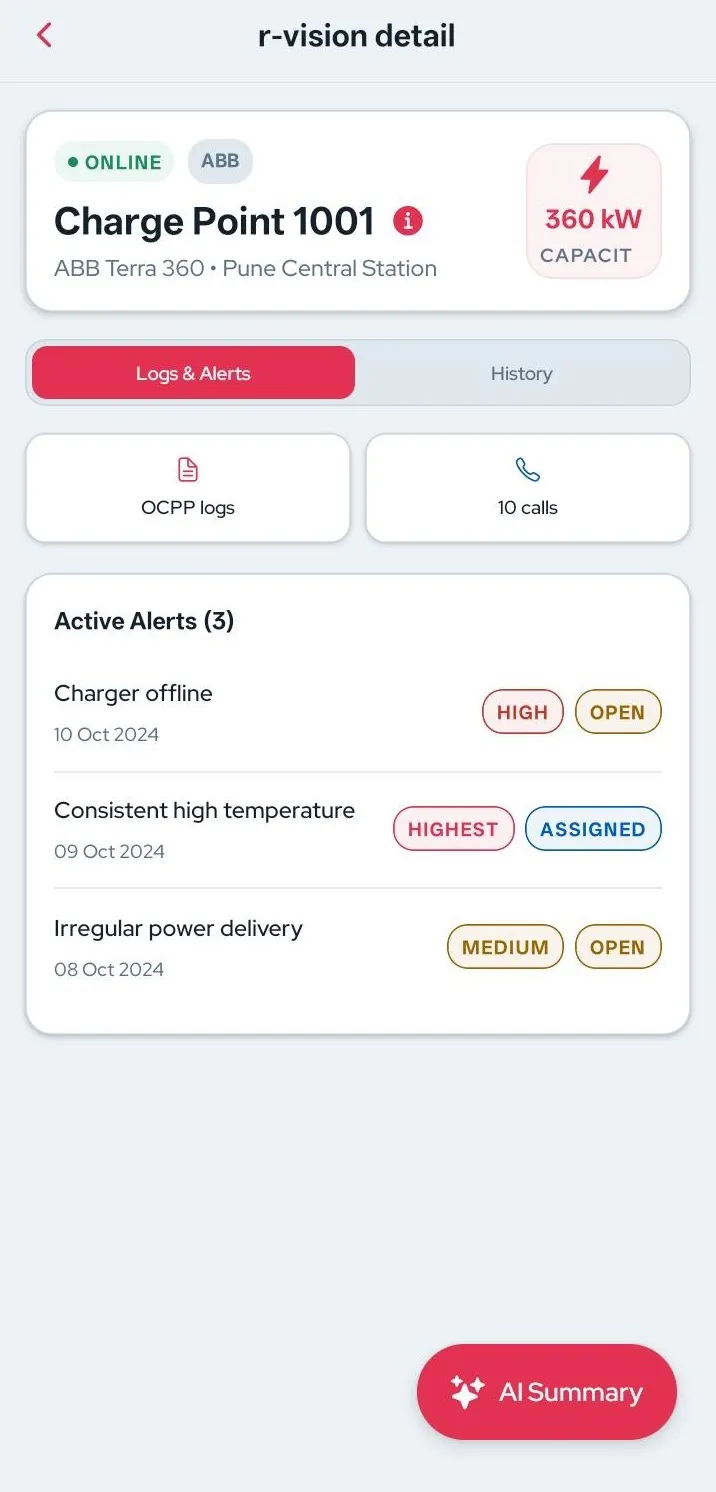
In the mobile app
Technicians pick up the job with its history, follow the steps and close it on site, online or offline.
R-Vision adds the charger's technical and operational data, plus remote actions to troubleshoot it before or during the visit.
Faults from fault analytics and prescribed actions from predictive and prescriptive maintenance become jobs here. Completed work updates the asset record.
Operators



Reactive maintenance fixes a charger after a fault. Preventive maintenance services it on a schedule before performance declines. R-One runs both on one work engine and one asset record.
Yes. Logged and Derived faults, and prescribed actions from predictive and prescriptive maintenance, can raise work orders directly.
Every checklist item and required piece of evidence must be complete. Central teams then approve or reject the work.
R-Vision is the part of the R-One mobile app that gives the field team a charger's technical and operational data on the phone, along with remote actions to troubleshoot it.
Share the size and make-up of the charging network, and the walkthrough will show what R-One surfaces on it. Demos run about 40 minutes.

